









Easy Panda Drawing Guide For Beginners In 5 Steps [Video + Images
![A collage of three images showing the process of drawing a panda from start to finish. Image used in the “Easy Panda Drawing Guide In 5 Steps [Video + Illustrations]” blog post.](https://2023.biowars.com/blog/wp-content/uploads/2022/11/panda_drawing_hero_image-635x314.jpg)
Time to learn how to draw a panda!
Did you know that pandas spend up to 16 hours a day eating?
The lazy bamboo lovers are known for their black-and-white markings that make them unique in the animal kingdom.
In this guide, we’ll share the steps to quick panda drawing that anyone, beginners included, can easily follow.
Here we go!
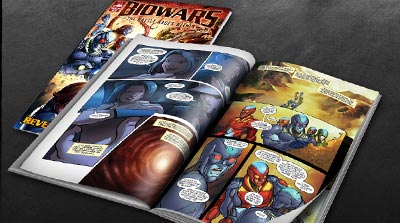
Uncover the battle raging within. Read the BIOWARS comic book for free!
Watch BIOWARS Artist’s Video On Easy Panda Drawing
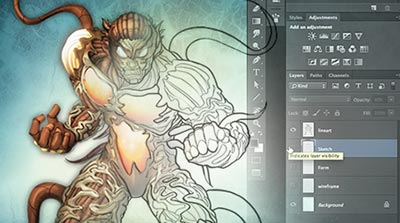
Lead BIOWARS comic book artist, Gonçalo Lopes, made a step-by-step video tutorial on panda drawing:
He shares his expert tips on how to draw a panda from scratch, so even if you don’t have art training, you’ll easily follow his guide.
And for all of you who prefer to look at images and draw a panda one step at a time, keep reading!
By the way, if you enjoy comic books, you’ll love BIOWARS — a comic book that describes the war between the immune system and pathogens in a fun way. Check it out and get to know its protagonists!
See how we drew the BIOWARS protagonists!
Sketching Tools To Draw A Panda
Although you can use any pencils you have for your panda drawing, these are some of our favorite tools that you might want to add to your toolbox:
- An H pencil: We recommend using an H pencil when sketching because of its hard lead that leaves a light trace on the paper. This means that you can easily erase it or even enhance it in later stages of panda drawing.
- An HB pencil: An HB pencil has a medium-hard lead, so you can use it when detailing or softly shading your sketch.
- A B pencil: The hardest lead of the three leaves the darkest trace on the paper, so it’s ideal for shading.
- A kneaded eraser: This type of eraser is soft, which allows you to change its shape and size depending on what you want to remove or even highlight.
- Lightly textured sketch paper: Your pencil is bound to glide over this paper’s smooth surface! Plus, erasing mistakes is easier since the paper’s texture isn’t rough.
Follow us on Instagram for more drawing tips and the latest BIOWARS updates!
How To Draw A Panda In 5 Steps
The easiest way to draw a panda is to sketch its body parts one by one using geometrical shapes and some simple forms that, combined, form a cute fluffy panda.
1. Draw The Panda’s Head And Its Belly
Recommended tool: H pencil
The first thing you’ll draw is the panda’s head.
So, let’s sketch a circle and place it close to the top of the paper:
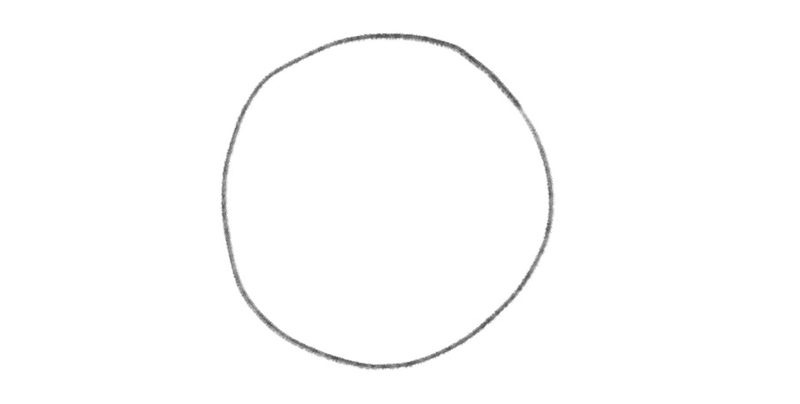
Geometrical shapes come in handy when drawing a panda’s body!
To draw the panda’s belly, let’s add another circle and place it below the head.
Leave some space between the two circles and make the body about two times larger than the head. After all, with all the eating they do for the better part of the day, pandas sure do have large tummies:
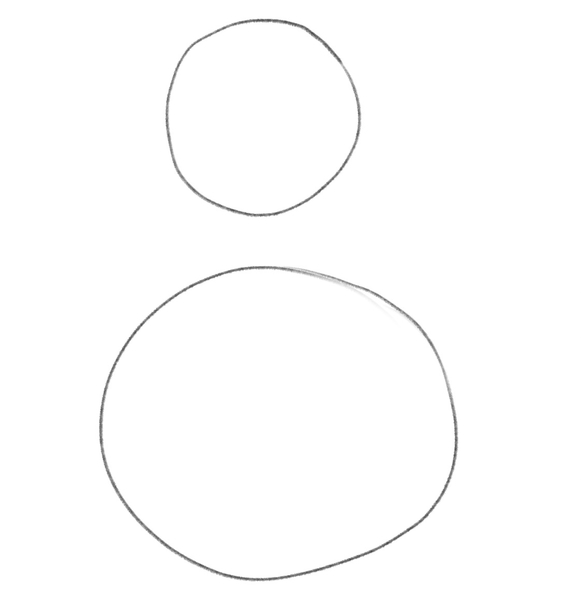
All you need are two circles to set up the base for your panda drawing.
2. Draw The Ears, Body, Legs And Tail
Recommended tool: H pencil
Next up, let’s draw the panda’s ears.
Add two small circles to the panda’s head, like this:
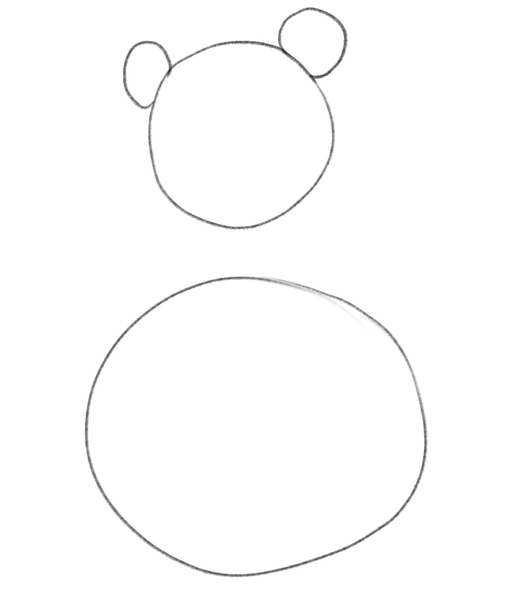
The sketch is now starting to look like a panda!
Now, let’s form the panda’s body by connecting its head to its tummy.
Draw a curved line below either ear and connect them to the widest points of the panda’s tummy.
Make sure that the line on the left slightly curves inward next to the head and then point it outward, toward the tummy, like so:
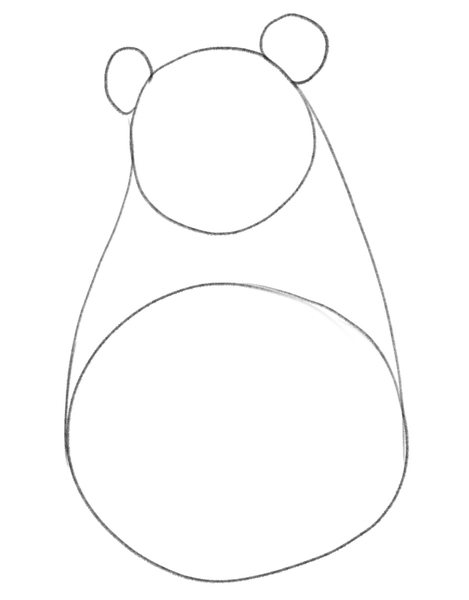
There’s no mistake that this is a panda in the making!
To draw the panda’s front legs, let’s use another familiar shape — a kidney bean!
So, let’s draw two large kidney beans on either side of the panda’s body.
Place the front legs slightly below the panda’s head and have them reach about two-thirds of the belly, like this:
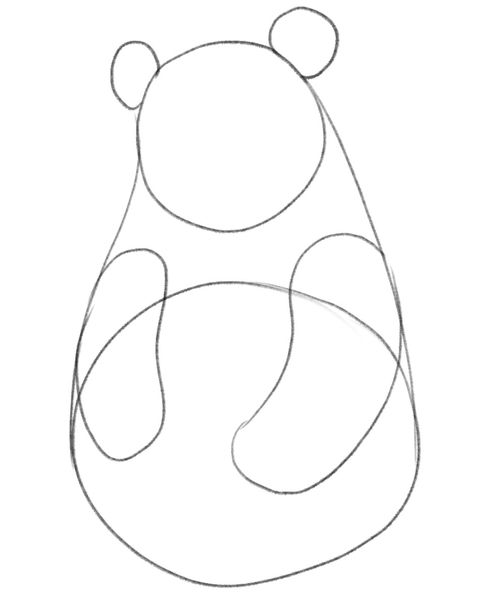
Pandas use their front legs to hold bamboo while they munch on it!
Since the panda we’re drawing is sitting, its back legs are folded next to its tummy.
To draw the rear right leg, start at the point where the right front leg touches the tummy.
From there, point the line outward then curve it down, so that it looks like a quarter of an oval shape. Then, draw a horizontal oval shape to depict the panda’s paw:
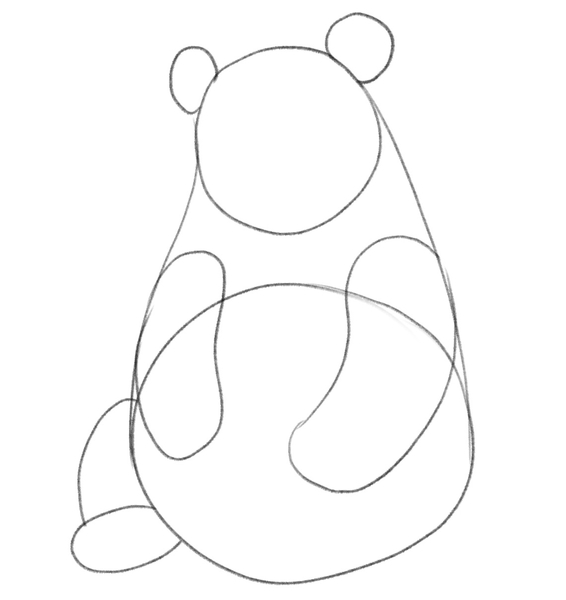
Pandas’ legs are short and round.
As for the panda’s left rear leg, let’s have the thigh touch the front left leg.
Again, you can shape the leg as a kidney bean, but make the thigh part thicker than before because pandas have strong back legs.
Now, let’s add the tail. Since the panda is chilling and sitting, you should add the tail between the panda’s rear legs.
To draw it, simply add a small oval shape between the back paws, like this:
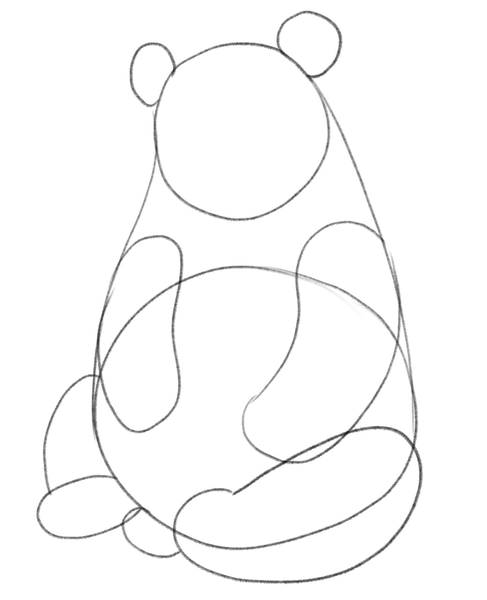
Make sure the panda’s rear legs are thick and strong.
3. Finish Drawing The Head
Recommended tool: H pencil
Panda’s have an excellent sense of smell that allows them to decide if a piece of bamboo is tasty or not.
Before we draw this panda’s nose, let’s outline the muzzle first.
Start in the middle of the head and draw a round shape that ends just above the chin.
Make sure that the top of the muzzle is slightly narrower than its bottom.
Next, add the patches around the panda’s eyes.
You can draw them one as an oval shape and the other more bean-like:
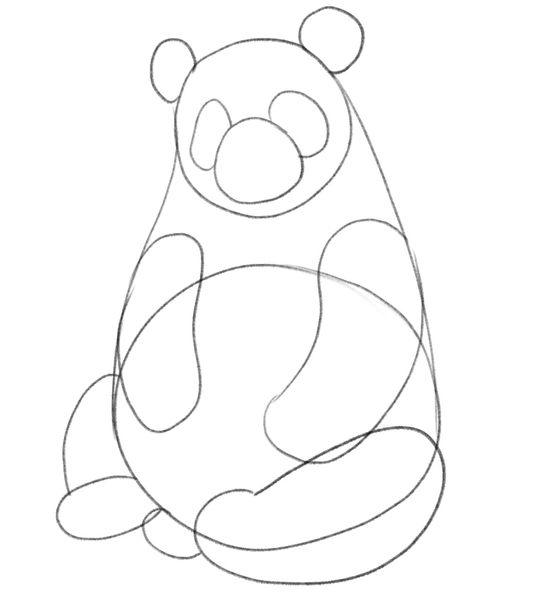
Pandas have recognizable black patches around their eyes.
Now, let’s add the irises.
By the way, did you know that the pandas’ pupils are vertical slits, just like the cats?
From this angle, though, you don’t have to draw the pupils. You can just sketch the irises like two super tiny circles and position them close to the muzzle.
Then, add a small bean-like shape to the lower half of the muzzle — that’s where the panda’s nose is:
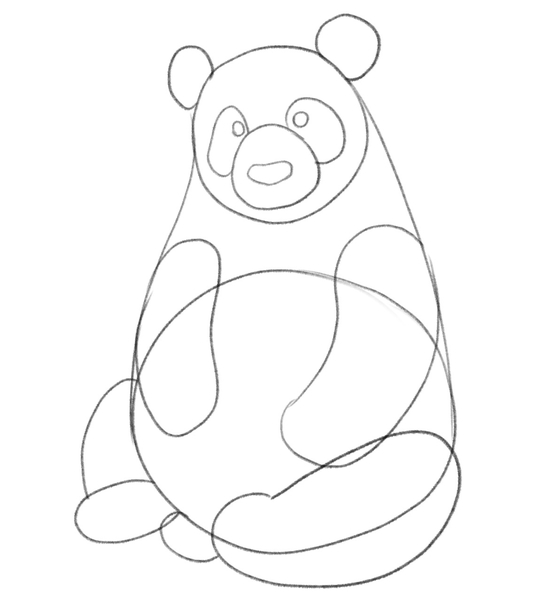
Your panda outline is finished!
4. Add The Finishing Touches
Recommended tools: HB pencil
Once you complete the outline, it’s time to grab an HB pencil or apply more pressure to your preferred pencil of choice to add some details to your panda drawing.
First up, let’s add the nostrils and shade them so they’re dark grey/black.
Now, let’s draw the panda’s mouth. To do so, you can simply attach a wide “W” to the nose.
Then, add a curved line in each ear for the earlobes.
Next, go over the outer lines of the panda’s body, to make them more pronounced.
Feel free to occasionally add short lines that stick outwards, to depict the fluffiness of the panda’s fur.
In the middle of the panda’s body, draw a “V” shaped patch of fur. That’s the part where its black fur turns to white:
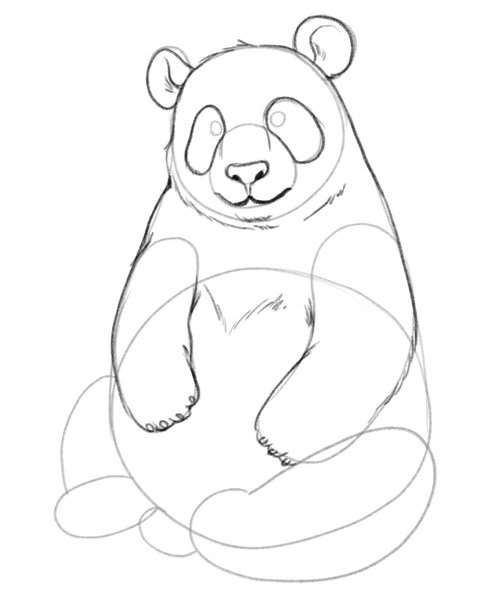
Time to start adding the details!
Continue outlining the lower part of the panda’s body.
Add the claws and make the legs and the tail appear furry.
Then, shade the eyes in a dark grey hue:
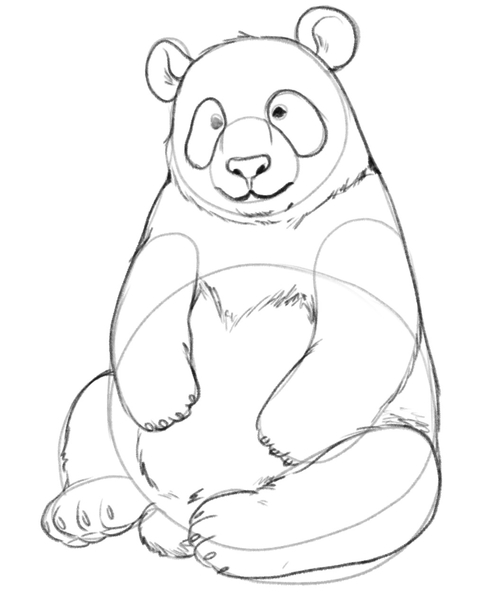
Your panda now looks all plush and cuddly!
5. Shade Your Panda Drawing
Recommended tools: HB and B pencils, a kneaded eraser
The final step to your panda drawing is to shade the sketch!
So, get your HB and B pencils and shade the ears, legs, eyes and nose.
Use a darker shade for the inside of the ears, irises and nostrils.
The rest of the panda’s body should be white, but feel free to softly shade the areas around the dark eye patches. You can also add soft shade on the belly because that’s where the shadow’s falling:
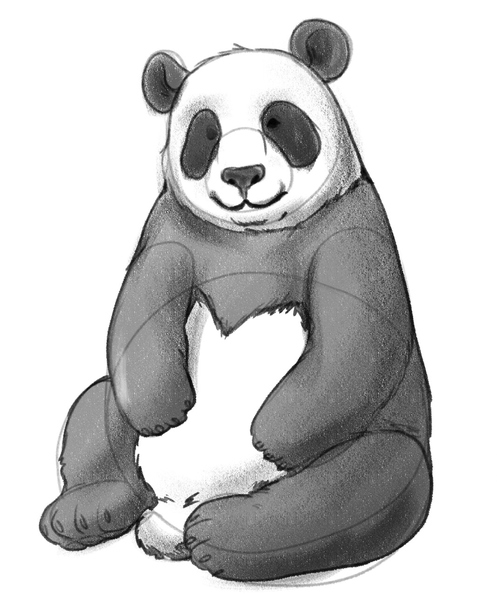
Only one more step to go!
The last step is the easiest one — grab your eraser and get rid of the unneeded lines:
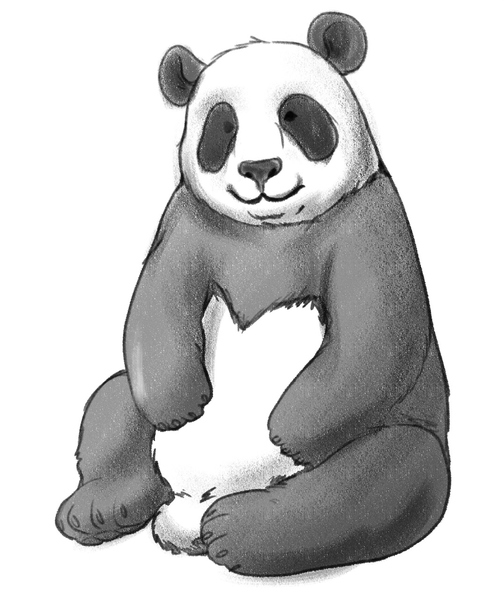
Your panda drawing is done!
Finished Your Panda Drawing? Try These Next!
Once you complete your drawing, would you like to learn how to draw other members of the animal kingdom?
We prepared beginner-friendly guides on:
We also have tutorials on drawing landscapes, including:
And if you want to learn how to draw a person, check out step-by-step tutorials on:
Follow our YouTube channel for more comic book artists’ tutorials!
A Recap On How To Draw A Panda
When drawing a panda, the most important thing is to start slow and draw one part of its body at a time.
You should:
- Draw the panda’s head
- Add its belly
- Sketch the ears
- Draw the front and rear legs
- Add the finishing touches and shade your drawing
When you finish your drawing, send it to us — we’d love to see your work! And let us know in the comments below if you have any suggestions on the tutorials we should cover next!